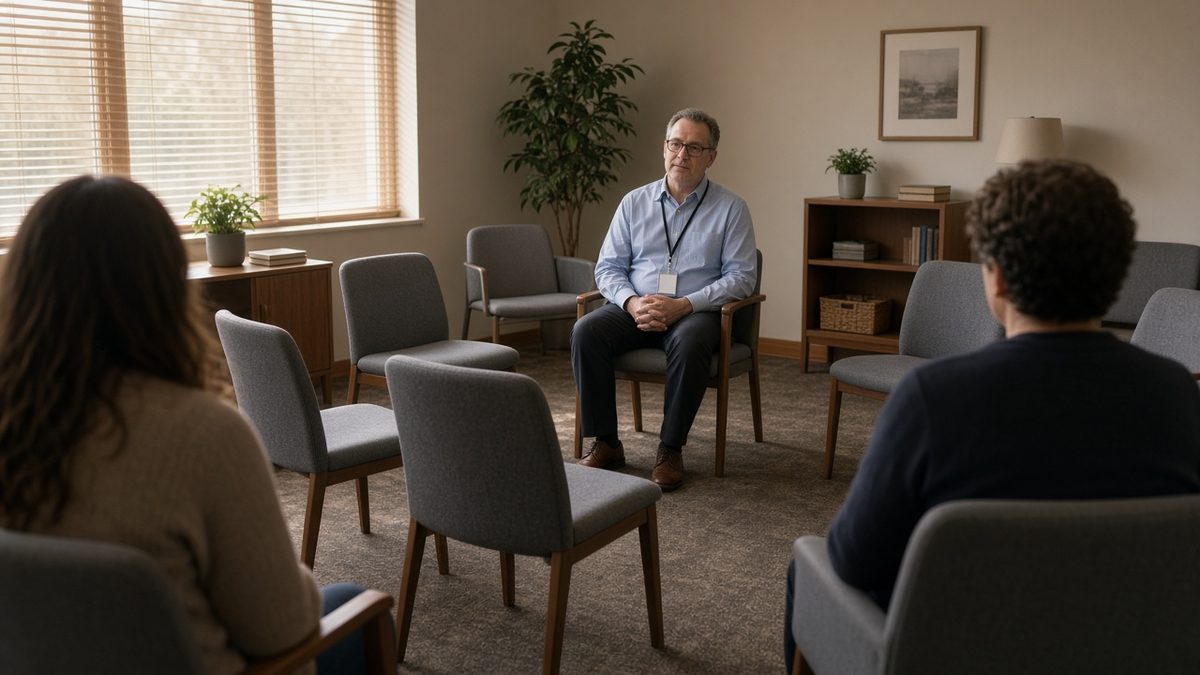
Mutual-support groups provide a way of getting sober that is different from the help offered in professional treatment settings. In mutual support, people offer and receive encouragement to help each other abstain and recover. People share their experiences and problems and what they have learned about overcoming them.
Mutual-support groups offer many advantages. For one thing, they can be flexible.
Flexible peer help can run with or be supplemented by formal treatment programs.
Peer support for drinking problems adds value to care provided by health professionals.
Trying several alcohol peer groups helps you learn which ones are best for you. For example, some people prefer larger groups for anonymity and others prefer smaller groups that are more personal.
What Mutual-Support Groups Offer
Mutual-support groups add peer contact alongside professional services.
They promote a sense of belonging and camaraderie with others who share the experience of addiction. This can help prevent relapse by providing encouragement, motivation, advice, inspiration, and hope to people facing recovery challenges.
Many mutual-support groups exist for alcohol problems; they vary widely in philosophy, format, and areas of emphasis.
Mutual-support groups also help people with alcohol problems feel less isolated and more hopeful. They provide companionship, empathy, and encouragement to help people make changes that they cannot or will not make on their own.
Many different types of mutual-support groups exist. Some have been around for decades while others are relatively new. AA is one of the best known, but it is not right for everyone.
For many, the mutual-support group is where they first begin their recovery journey, and it remains an important part of their support system throughout. There is a large variety of groups to choose from, so finding one that's right for you may take some searching. Each group has its own approach to addressing alcohol use problems.
Alcoholics Anonymous
Alcoholics Anonymous meetings center on shared experiences among members about alcohol use, recovery and related topics. Members typically share their stories with one another in a group setting at AA-sponsored meetings. During these meetings, attendees can also participate in open discussions and support one another as they work toward sobriety.
Twelve-step AA meetings invite members to share a problem, learn from others' experiences and practice the principles of AA. A member shares what led them to drink too much alcohol. They describe their recovery and how they have applied AA principles to maintain abstinence.
In addition, Alcoholics Anonymous does not provide professional counseling services or treatment. Therefore, people who participate in this program should continue their therapy or medical care with a mental health professional or licensed doctor as well as attend group meetings regularly.
The program also emphasizes the concept of a "higher power." (AA does not belong to any specific religion.)
SMART Recovery and Other Options
SMART Recovery emphasizes four skill areas for recovery:
1. Building motivation to abstain
2. Coping with urges
3. Problem solving
4. Lifestyle balance
Members of SMART Recovery are encouraged to work on improving their skills in all four of these areas.
LifeRing and Women for Sobriety offer non-12-step options for peer support.
LifeRing is an abstinence-oriented, secular support network for those struggling with alcoholism. The LifeRing Secular Recovery program is peer-led mutual support for recovery from alcoholism, drug dependency, or addictive behavioral problems. Unlike 12-Step groups, LifeRing does not require a religious faith, reliance on a higher power. The focus of the group is entirely secular.
Secular peer rooms such as LifeRing, Women for Sobriety, and SMART Recovery focus on self-empowerment to achieve a lifetime of abstinence. The SMART program (Self-Management and Recovery Training) encourages participants to make positive choices by teaching them coping skills, problem solving, motivation to change, and lifestyle balance. In contrast to 12-step programs such as AA, which emphasize spirituality, these groups encourage a secular approach.
Many people benefit from going to these types of recovery groups, but they are not run by professional clinicians. If you need additional help, such as medication or psychotherapy, then treatment is the right option for you.
Groups for Family Members
Family members can attend peer groups such as Al-Anon. These groups provide mutual assistance in the form of meetings and support from others who have faced similar challenges.
Relatives may sit with Al-Anon whether there has been "a day of drinking or a lifetime of drinking." They will find comfort, strength and understanding in the experience, strength and hope shared by others who have faced similar circumstances. The group is not affiliated with any other organization.
Attendance by relatives does not depend on the patient's admission to treatment. These programs often offer education about alcohol problems and family recovery issues, as well as an opportunity to share experiences with other families.
Family members, friends, and associates can learn about themselves, their reactions, and how to take care of themselves during recovery.
Alateen meetings are meant for younger relatives or friends affected by someone else's drinking. It is not a therapy group or religious program, but instead provides a safe place where teens can talk about their feelings.
SMART Recovery provides a research-based approach to support family members and friends.
Using Groups With Professional Treatment
When someone is just starting in a 12-step program or another type of mutual-help group, professional treatment can provide an important foundation. The skills learned in therapy help people apply the principles used by groups like AA. For example, behavioral treatments teach communication and problem-solving skills that are valuable when participating in a self-help group.
If someone goes back to using alcohol after completing professional treatment, that person will be able to return to the mutual-help group for additional help in dealing with their AUD.
A person may start by getting medical and/or behavioral treatment, then join a mutual-help group (or several) as a way of continuing to improve their recovery.
Professional treatment and mutual-support groups often work together for the best results. For example:
The person might begin with a brief stay in a residential treatment program, then move into outpatient counseling while continuing to go to a local AA group.
A 12-step facilitation therapy session can prepare people who are new to recovery by increasing their motivation and knowledge of how to benefit from AA or another mutual-support group.
Inpatient detoxification services might be combined with individual counseling, group therapy sessions, educational sessions about the effects of alcohol use disorder on health and family relationships, and referral to AA.
If you are using professional treatment for AUD, it is important to understand the potential benefits of joining a support group. Your treatment provider or healthcare provider may suggest groups that could be helpful for you.
Peer Recovery Support in Illinois
In Illinois, recovery support services include peer and recovery coaching, employment training, recovery skills training, spiritual support, and access to a network of recovery support communities.
Peer recovery coaches give non-clinical help during every stage of the recovery process. Peer Recovery Coaches (PRCs) have personal experience in long-term recovery, and are trained to guide clients to reach their own goals for recovery. PRCs do not provide medical or clinical services, but they will work with you to access clinical care, when needed. They may help you connect with other resources that support your recovery including employment training programs, housing, health care and education.
Peer recovery coaching is a process that helps people address challenges with problematic substance use through building and maintaining connections to natural social networks and communities.
Peer recovery coaches are not licensed clinical providers. The peer recovery coach is not a therapist or counselor nor do they prescribe medication.
Peer Recovery Coaching is not a substitute for evidence-based treatment of SUD. Peer recovery coaching supports patients with living and engaging in the world, helping them to navigate resources, learn skills, and build relationships needed to sustain their recovery goals.